
We've recently received a lot of heartwarming feedback. Many of you have gifted the ULTRIIX S1 to your elderly family members, hoping it would help relieve their long-standing joint discomfort.
But one question keeps coming up repeatedly: Why do different people have drastically different experiences when using it on the same areas—knees, elbows, and feet—at the same intensity level?
One user shared that their mother uses level 7 on her knees, feels only a slight, comfortable soreness, and happily uses it for 20 minutes every day. But their father winced in pain the moment he placed the device on his knee. He tried it on his elbows and feet too, but found the aching and soreness unbearable and couldn't use it at all.
Is this a product issue? Absolutely not. This huge difference in sensation is actually your body's most honest "wear-and-tear alarm."
1. Why Is Your Body Reacting So Strongly?
We can use a very relatable analogy to understand this: A chronically worn joint is like a water pipe that's been clogged for years.
For elders who have spent decades doing heavy physical labor or overusing their joints, their knees, elbows, and other areas have accumulated massive amounts of metabolic waste products—such as lactic acid and inflammatory mediators—from decades of repeated friction and stress.
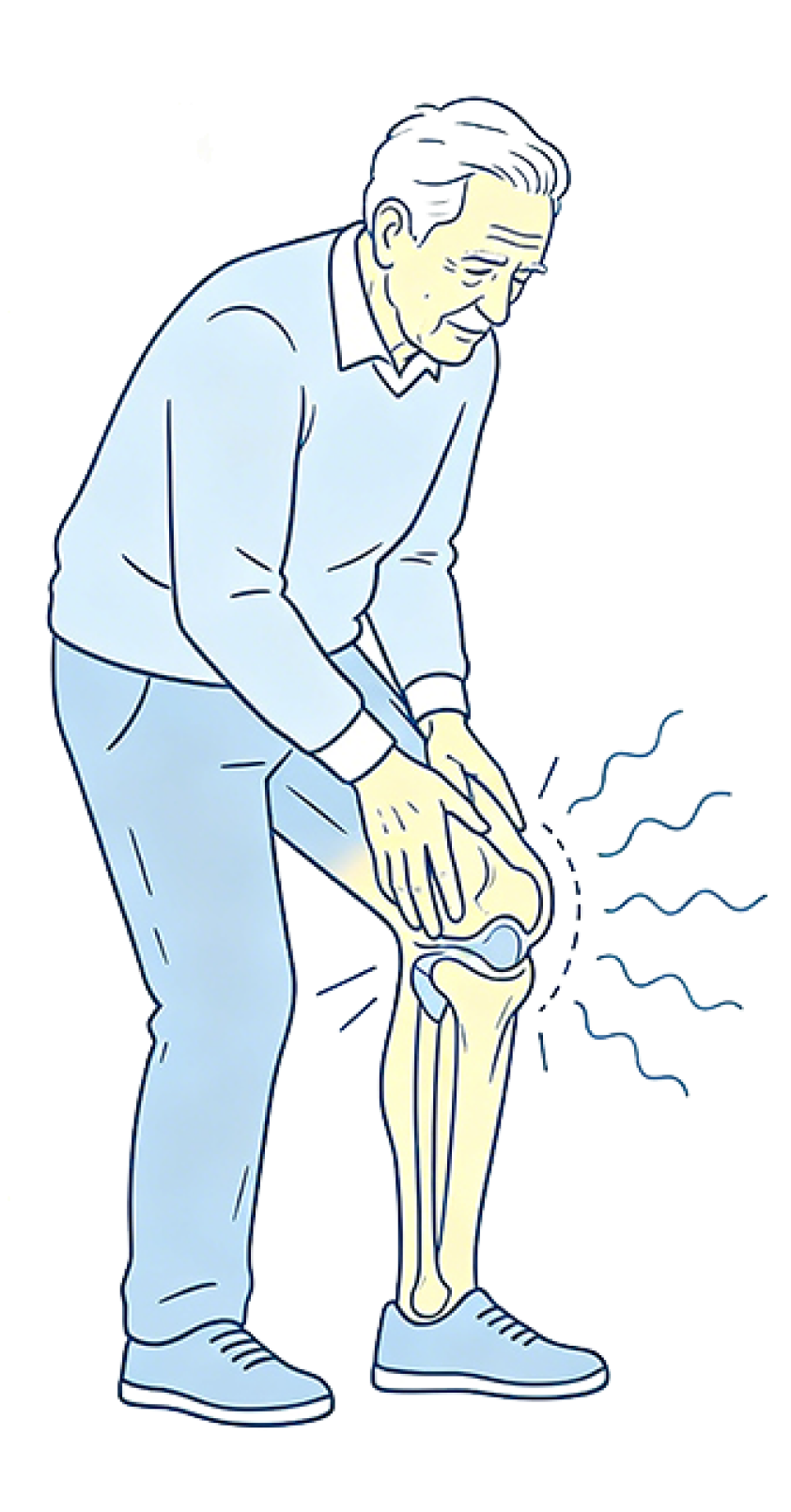
Over time, this leads to varying degrees of wear on the articular cartilage, degenerative changes in tendons and ligaments, and even aseptic inflammation.
As a result, the synovial membrane, ligaments, and other tissues around the joint become extremely fragile and sensitive. When ultrasonic energy is applied to these areas, the local blood circulation—previously slow or nearly stagnant—suddenly accelerates. It's just like when a clogged pipe is suddenly cleared by high-pressure water flow: the long-accumulated "waste" starts being rapidly flushed away.
This process directly stimulates the now hypersensitive nerve endings, causing intense aching and stinging sensations. This is not a bad thing—it's actually the first sign that your body is starting to self-regulate and heal.
In contrast, those who experience milder sensations generally have healthier joints and better blood circulation, so their bodies can adapt more quickly to the ultrasonic vibrations.
2. What's the Correct Approach When You Feel Intense Soreness?
The answer is definitely not to give up immediately—but to take it slow and steady.
For areas that react strongly, immediately lower the intensity and start with levels 1-3, using it for only 1-3 minutes per session. Give your body enough time to gradually adapt to the ultrasonic vibrations, and allow those sensitive soft tissues a proper "warm-up" period.
Never rush into it thinking "higher intensity means better results." For severely worn joints, high-intensity stimulation will only worsen discomfort and make you mistakenly believe the product isn't right for you. The correct way to care for your joints is always gradual and progressive.
3. Why Should You Persist with Low-Intensity Care for the Most Painful Areas?
Some people stop using the device entirely after their first experience of intense soreness and stinging. But the truth is, the areas that react most strongly are precisely the parts of your body that need the most care.
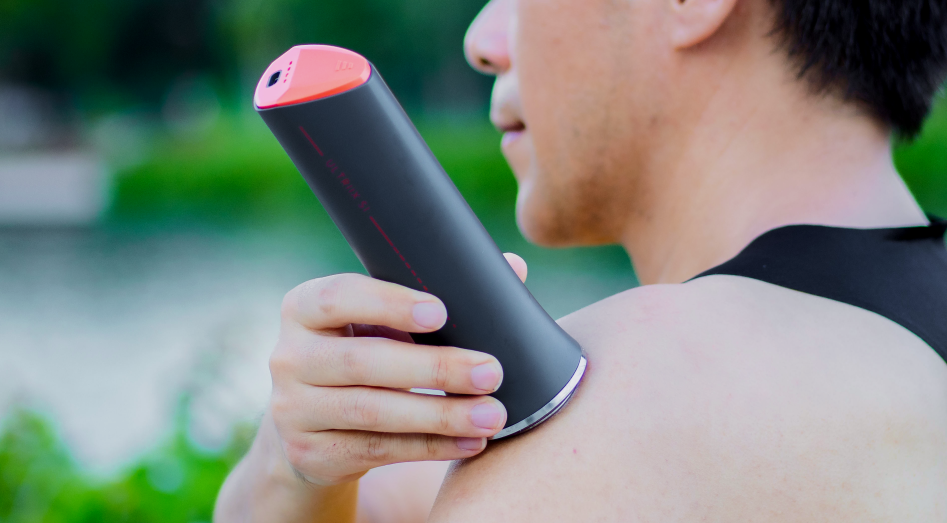
Consistent, gentle daily massage at low intensity and for short durations steadily improves local blood circulation, gradually metabolizes accumulated inflammatory waste, and slowly relaxes stiff, degenerated soft tissues.
This process may take weeks or even months, but you will notice clear improvements:
1. The soreness at the same intensity level will gradually decrease
2. Joint stiffness will slowly diminish
3. Discomfort when climbing stairs or putting weight on your feet will fade away
4. Joints that used to feel cold and sensitive to temperature will become warmer
4. Conclusion
Joint care is never about "no pain, no gain," and it's never an overnight success. Scientific adaptation and long-term consistency are the true keys. Everyone's body is unique. Don't compare your intensity levels or session durations to others. Find your own rhythm, listen patiently to your body, and S1 will reward you with the best possible results.