

Contact sports involve direct or indirect tactical competition, strength and skill contests between participants. Whether you’re boxing out for rebounds in basketball, shielding the ball in football, or exchanging strikes in combat sports, these activities are full of competitive thrill and challenge.
People who stick with contact sports long-term reap plenty of fitness rewards, yet their bodies endure hidden wear and tear over time. In this article, we’ll break down common contact sports and cover a critical post-recovery tip most athletes overlook.
1. Categories of Contact Sports
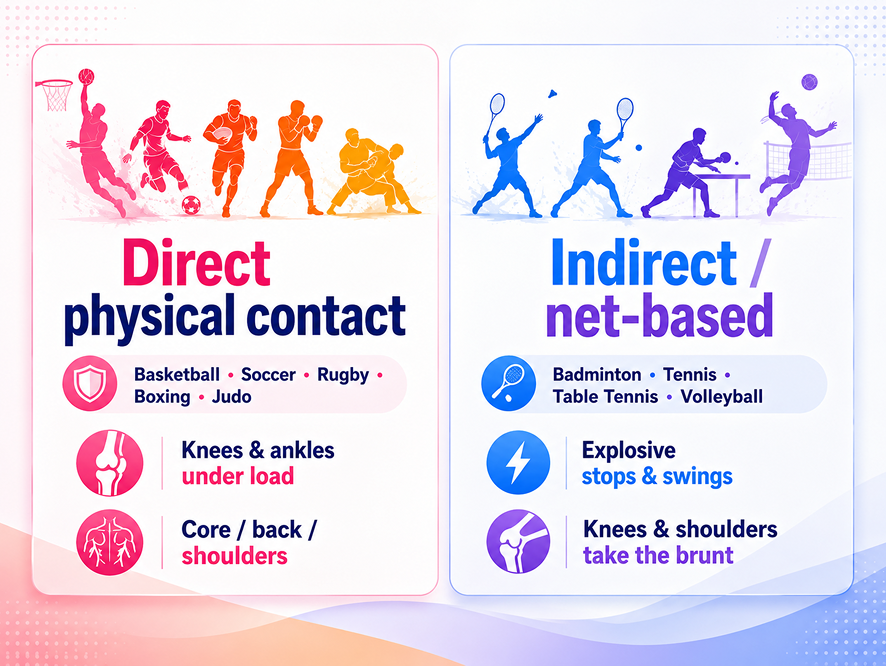
Direct Physical Contact Sports
✅ Basketball: Frequent box-outs, drives and rebounding with constant physical contact; knees and ankles endure heavy load.
✅ Football: Aerial headers, tackles, sharp cuts with massive impact on lower limbs.
✅ Rugby / Ice Hockey: High-force collisions that put strain on the full musculoskeletal system.
✅ Boxing / Sanda / Muay Thai / MMA: Close-quarters direct combat requiring explosive power and impact resistance.
✅ Judo / Wrestling: Grappling-focused sports with heavy stress on the core, lower back, shoulders and neck.
Indirect / Net-Separated Competitive Sports
✅ Badminton / Tennis / Table Tennis: No physical contact, yet rapid direction changes, stretching saves and fast swings create intense competitive strain.
✅ Volleyball: Repeated jumping for spikes and blocks, putting consistent pressure on knees and shoulders.
2. Key Benefits of Contact Sports
1. Build Well-Rounded Physical Fitness
Contact sports train all six core physical qualities: strength, speed, endurance, agility, coordination and flexibility. Regular participants often show superior overall athletic ability compared to people who only do gym weight training.
2. Boost Cardio Health & Basal Metabolism
Most contact sports follow high-intensity interval patterns. They effectively improve cardiovascular endurance, speed up metabolism, support fat management and benefit long-term heart health.
3. Sharpen Reaction Speed & Mental Toughness
Competitive play demands split-second judgment and decision-making. Consistent training boosts neural reaction speed and stress resilience, helping people stay calm and decisive in work and daily life.
4. Relieve Stress & Stabilize Mood
Intense competition works as a powerful emotional outlet. The release of dopamine and endorphins during exercise eases anxiety, improves sleep and sustains a positive mindset.
5. Foster Teamwork & Social Connections
Team sports like basketball and football build communication, trust and collaboration. Athletes develop strong bonds through shared competition.
3. Hidden Physical Wear & Tear From Contact Sports
For all the excitement of competition, cumulative injuries often develop silently, only becoming obvious once they turn chronic.
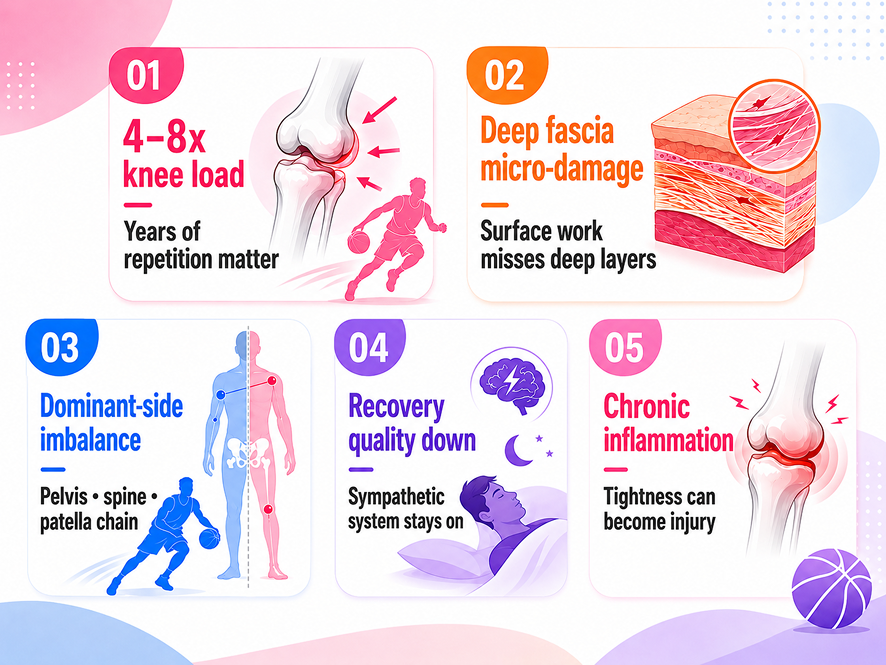
1. Progressive Joint Degeneration
During basketball landings, knees can absorb 4–8 times your body weight. Sharp pivots create shear force on bent knees, which may damage the anterior cruciate ligament and meniscus. A single session rarely causes noticeable pain, but years of repeated impact accelerate joint degeneration.
2. Deep Fascial Fatigue Cannot Be Fixed With Simple Stretching Many athletes think basic stretching is enough after training. However, high-intensity competition causes micro-tears and fascial adhesions deep in soft tissues. Regular stretching, foam rolling and manual massage mostly target superficial muscles and fail to release deep tightness — the main reason you may still feel stiff and sore the next day even after stretching.
3. Asymmetrical Movement Patterns Disrupt Body Alignment
Nearly everyone has a dominant side: preferred hand for racket sports, dominant leg for pushing off. Over time, uneven muscle strength and size lead to pelvic tilt, spinal misalignment and abnormal patellar tracking. These issues are often painless at first but raise the risk of injury later on.
4. Prolonged Neural Excitement Impairs Recovery Quality
Contact sports trigger sustained sympathetic nervous system activation long after the game ends. Many athletes struggle with poor sleep because their nervous system cannot fully relax. Tissue repair mainly happens during rest; insufficient recovery reduces muscle healing and increases injury risk for your next session.
5. Silent Chronic Low-Grade Inflammation Builds Up
Repeated micro-trauma in soft tissues creates persistent low-grade inflammation. Unlike acute sprains with sharp pain, it usually manifests as lingering stiffness, soreness and limited mobility. Many athletes grow accustomed to this tight feeling until a routine movement causes strains or tendon tears.
4. Smart Recovery: Maximize Gains While Minimizing Damage
If you want to enjoy long-term benefits from contact sports and avoid hidden bodily strain, deep soft tissue recovery after training is essential — and widely neglected by most hobbyists.
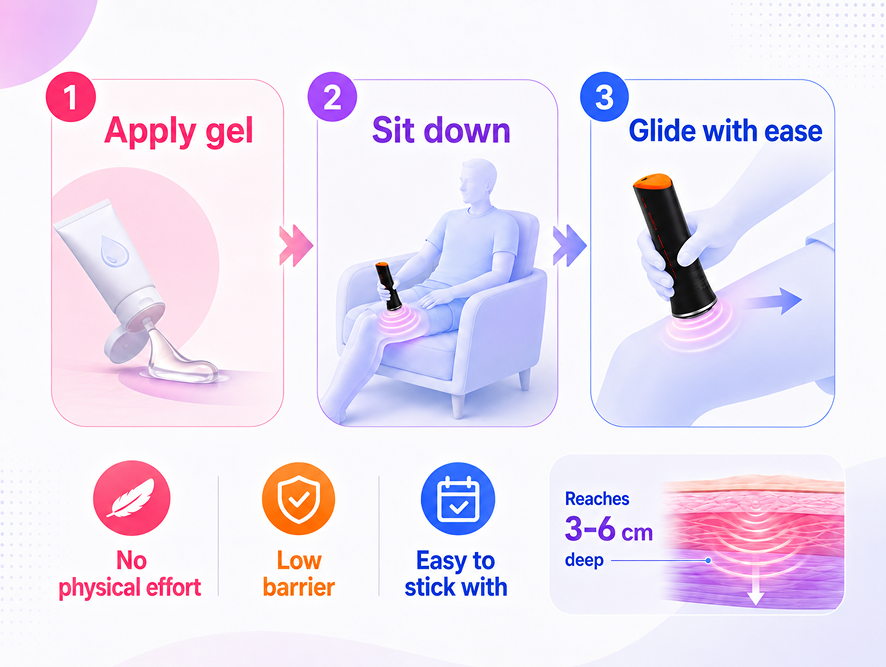
The ULTRIIX S1 Ultrasound Massager delivers ultrasonic energy to deep soft tissues, ideal for home recovery for competitive athletes. Equipped with high-frequency ultrasonic vibration technology, it penetrates deep subcutaneous layers to reach fascia and tendons that are hard to access via conventional recovery methods. Combined mechanical micro-vibration and gentle thermal effect improve local circulation, release fascial adhesions and relieve persistent tightness and soreness even after stretching.
It works well for knee soreness post basketball, tennis elbow stiffness, or tight shoulders and backs after combat training. Another advantage: the ULTRIIX S1 requires no manual pressing force from the user. After exhausting competitive sessions, most people lack energy for foam rolling or self-massage. Simply apply the matching gel and glide the device slowly over the target area. You can complete deep tissue recovery while seated, with minimal learning curve, making it easy to stick with long-term.
Contact sports are a long-term investment, and your body is your most valuable asset. Integrating deep post-session recovery as a mandatory part of training ensures sustainable positive returns.
There is nothing wrong with loving competitive sports, but do not let your body bear all the burden alone. Give your all on the court, and use the ULTRIIX S1 to deliver professional deep recovery for your muscles, fascia and joints afterward.