

Golf is a sport of skill and endurance. Behind every elegant swing, the lower back endures tremendous stress from repeated asymmetrical twisting. Many golfers have encountered such troubles: feeling fine while playing, yet waking up with a stiff, achy lower back the next day; having strong core strength but still suffering recurring lower‑back pain; pain subsiding after rest, only to return once back on the course.
Many golfers attribute back pain simply to “being tired from golf”, choosing to rest in bed or blindly strengthen lower‑back muscles. They overlook the real root causes: swing compensation, limited hip mobility and chronic fascial adhesions. As the key link connecting upper and lower body, the lumbar spine is only supposed to offer stable force transmission during backswing, downswing and follow‑through. When hip rotation is insufficient and thoracic spine mobility is restricted, the lumbar spine is forced to complete all rotational movement, accumulating micro‑tears in soft tissues over time. Lower‑back pain is not merely caused by “weak lower‑back muscles”. It relates to force patterns, joint mobility, post‑game recovery and regular home‑based care.
In this article, we focus on frequent lower‑back strains among golfers. We break down how swings place pressure on your back, teach you to distinguish muscular‑fascia strain from intervertebral disc problems, share practical pre‑game warm‑ups, post‑game recovery routines and home preventive care. We also address real‑world golfer concerns such as recurring old sports injuries and uneven tension between left and right sides of the lower back. This guide helps golfers read bodily signals from their lower back, apply scientific interventions, reduce back strain and enjoy golf for longer.
Q&A section
Q1. Where does swing‑induced pressure on the lower back come from?
Golf is an asymmetrical rotational sport. Stress builds throughout backswing, downswing and follow‑through. During the backswing, back muscles on one side stretch while the opposite side stays tight, creating substantial torso twist. At the instant of downswing, stored energy releases explosively. If hip rotation is inadequate, huge shear force lands on the lumbar spine. Many amateur golfers twist using their lower back to generate power instead of driving rotation from the hips.
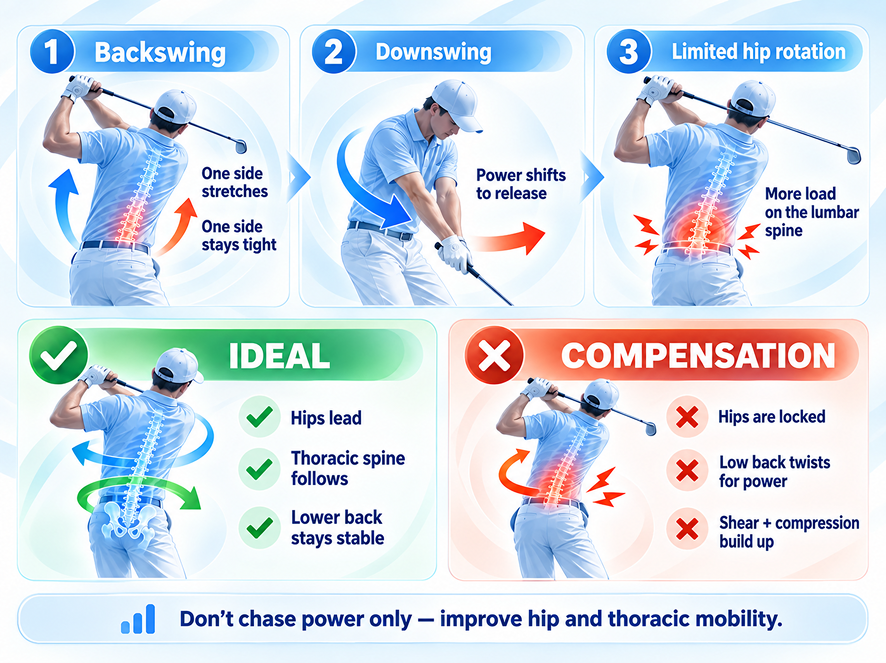
✅ Ideal movement pattern: Hips rotate first, driving thoracic spine rotation; lower back only provides stable force transmission.
❌ Compensatory faulty pattern: Locked‑up hips cannot rotate, forcing the lumbar spine to bear all twisting motion. Every swing subjects the lumbar spine to combined torsion and compression, gradually building micro‑damage in back soft tissues.Many golfers only focus on generating swing power while ignoring hip and thoracic mobility, turning the lower back into the “sacrifice” of every swing.
Q2. Can you still get lower‑back strain even with a strong core?
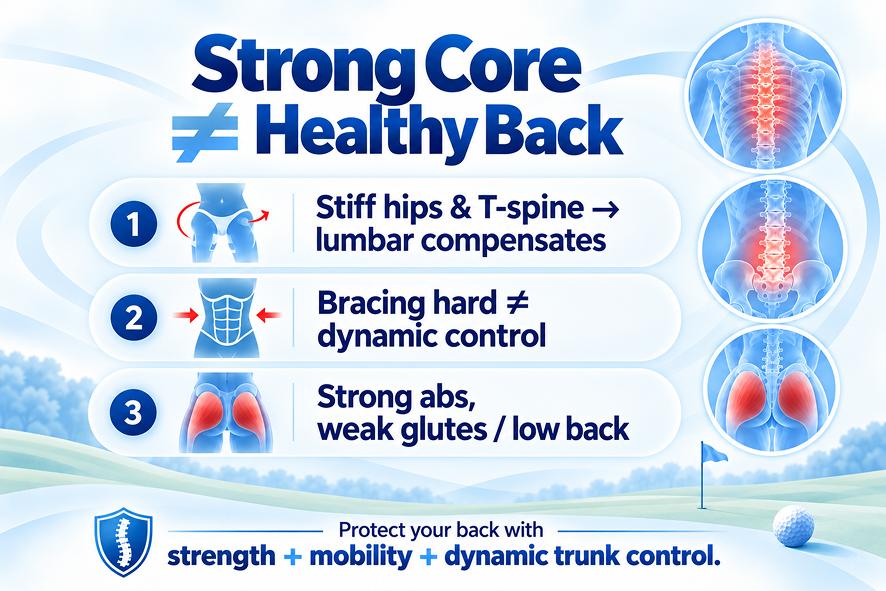
Yes. Solid core strength does not guarantee freedom from back pain.
● Case 1: Good strength but poor mobility. Even with strong abdominal and back muscles, restricted hip rotation or stiff thoracic spine forces the lumbar spine to compensate for rotational movement.
● Case 2: Static bracing instead of dynamic core control. Golf requires dynamic core stabilization rather than rigidly locking your torso. Some golfers hold their abdomen tensed and hold their breath through swings. Sustained over‑contraction strains and compresses the lumbar spine.
● Case 3: Muscle imbalance. Strong abdominals paired with weak glutes and posterior back muscles create uneven force distribution during swings. Besides strength training, you must improve joint mobility and practise dynamic torso control to truly protect your lower back.
Q3. Why do many golfers feel fine right after playing, yet develop lower‑back soreness the next morning?
This is delayed soft‑tissue stress response from exercise. While playing, sympathetic nervous system activation and focus on shots mask fatigue signals from fascia and muscles. Micro‑injuries accumulate throughout the round without noticeable discomfort immediately after play. After rest, local circulation shifts and inflammatory mediators build up. Stiffness and soreness appear when you bend or roll over in bed. This phenomenon is common in sports with unilateral twisting movements. It highlights how critical post‑round recovery is — absence of immediate pain does not mean your back escaped stress.
Q4. What golf gear choices can indirectly reduce lower‑back burden?
Equipment cannot fix flawed movement patterns, yet it can lower extra physical load.
1) Club total weight: Over‑heavy full‑set clubs create larger inertial resistance for your torso on every swing and aggravate back strain. Golfers with lower physical strength or existing back vulnerability may opt for lightweight clubs.
2) Golf bag: Heavy bags carried over one shoulder tilt your body continuously and add persistent back stress during course transit. Prefer double‑strap backpack‑style golf bags; remove unnecessary items to avoid excess weight.
3) Golf shoes: Excessively grippy shoes carry hidden risks. When feet are firmly locked by footwear but hips cannot rotate, twisting force transfers upward toward the lumbar spine. Select shoes matching your swing rhythm.
Equipment is only supplementary. Poor swing compensation will still trigger back strain no matter how good your gear is.
Q5. Which muscle groups should you strengthen for better lower‑back protection?
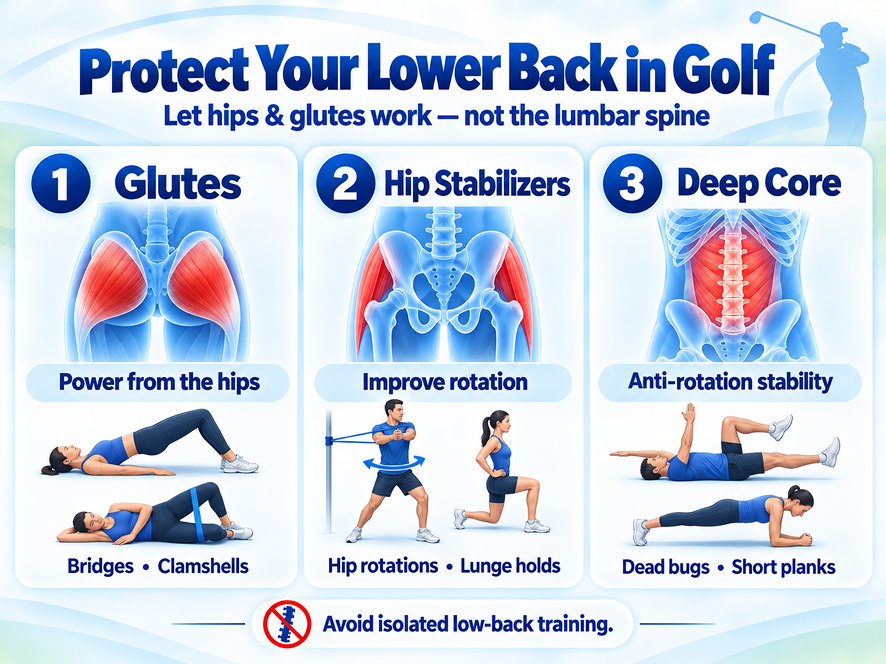
The core principle for golf back protection is letting hips and glutes deliver main power output and minimising lumbar compensation. Prioritise three muscle groups: gluteal muscles, peri‑hip stabilisers and deep core muscles. Avoid over‑training lower‑back muscles in isolation.
●Gluteal muscles (gluteus maximus, gluteus medius) These are the most critical muscles for golf‑related back health. Gluteus maximus generates hip rotation and power in swings; gluteus medius stabilises the pelvis and prevents pelvic tilting mid‑swing. Well‑developed glutes mean rotational force comes from hip joints instead of forced lumbar twisting. Good home exercises include glute bridges, single‑leg glute bridges and clamshells.
● Peri‑hip muscles (hip external rotators, hip flexors) Stiff, weak hips are a common source of golfer’s back ache. Strengthen hip external rotators to improve rotational range; stretch tight hip flexors to prevent lumbar pull from anterior pelvic tilt. Recommended drills: side‑lying hip external rotation, static lunge holds.
● Deep core muscles (transversus abdominis, multifidus) Different from superficial abs trained via crunches, deep core muscles stabilise the torso and limit excessive lumbar rotation during swings. Dead‑bug drills and short‑duration planks enhance torso anti‑rotation capacity. After every strength session, use ULTRIIX S1 to care for trained muscle groups, clearing micro‑inflammation and soft‑tissue damage caused by exercise. Spend 8‑15 minutes letting ULTRIIX S1 ultrasound penetrate deep muscle tissue, relieve fatigue and repair micro‑injuries to prevent cumulative harm.
Q6. What home preventive care routine should golfers follow for the lower back?
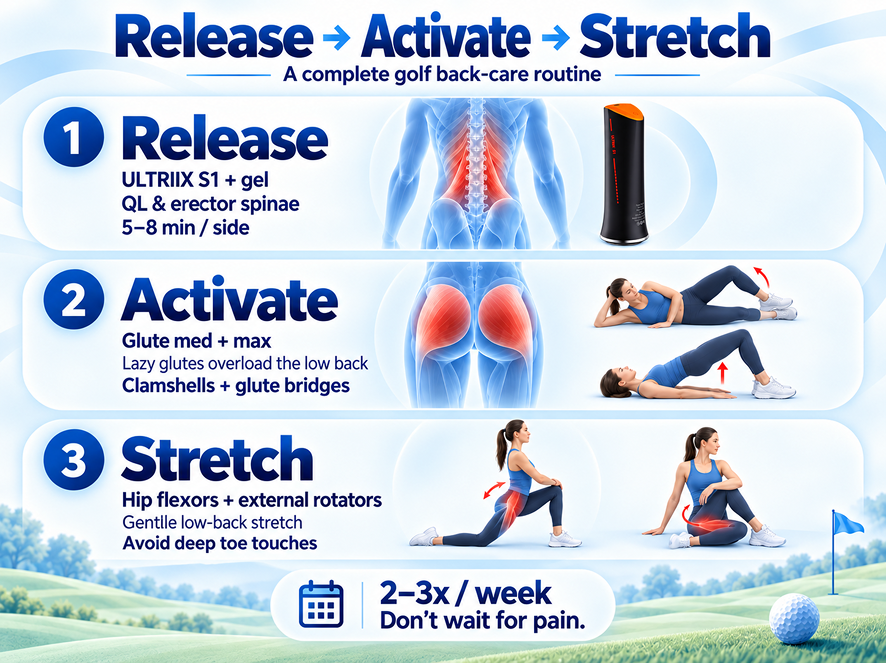
Three‑step routine: Release → Activate → Stretch.
① Release: Apply sufficient gel to Ultriix S1. Glide slowly over quadratus lumborum and erector spinae on each side for 5‑8 minutes to reduce fascial tightness and adhesions.
② Activate: Focus on gluteus medius and maximus. Much golf‑related back stress comes from “lazy” under‑active glutes forcing the lower back to overwork. Clamshells and glute bridges build hip stability.
③ Stretch: Prioritise hip‑flexor and hip‑external‑rotator stretches followed by gentle back stretches. Avoid deep toe‑touch bending which compresses the lumbar spine heavily. Golfers who play frequently should run through this routine 2‑3 times weekly, before pain develops.
Q7. Can I use Ultriix S1 for preventive care if my lower back is already stiff from office sitting before golf?
Absolutely. Prolonged desk work shortens and tightens quadratus lumborum and erector spinae, creating fascial adhesions. Many golfers start their round already in a pre‑strained state, amplifying lumbar stress in swings. One to two hours before teeing off, use Ultriix S1 to pre‑treat soft tissues on both sides of your lower back. This releases sitting‑induced fascial tightness and reduces lumbar compensation during swings. Device therapy cannot replace complete dynamic warm‑up, even with pre‑treatment.
Q8. Is it good or bad to feel no soreness while using Ultriix S1 for pre‑game warm‑up?
This is positive. If you feel zero ache, soreness or tingling on a treated area during warm‑up device use, fascia and muscles in that region are in good condition without notable fatigue or adhesions. Simple activation maintenance is sufficient.
Q9. Besides Ultriix S1 massage device, what key warm‑up drills should golfers complete before play?
Pre‑golf warm‑ups focus not on heavy forceful stretching, but activating hips, thoracic spine and core to reduce lumbar compensation. Complete four simple dynamic drills within 5‑8 minutes before teeing off.
● Hip circles: Feet shoulder‑width apart, hands on hips. Make slow circular pelvic rotations, 10 repetitions each direction, to free hip mobility and prevent forced lumbar twisting during swings.
● Torso rotation shadow swings: Stand stable, simulate backswing‑downswing rotation without a club. Gradually increase range, 12 alternating repetitions, to open thoracic rotational mobility.
● Lunge rotations: Hold stable forward lunge, rotate upper torso slowly toward the forward leg, feel hip‑torso opening, 8 repetitions per side to release tight hip flexors.
● Slow partial swing practice: Perform slow half‑swings with club, no distance pursuit. Complete 10‑15 repetitions to wake up full shoulder‑back‑forearm kinetic chain and condition nerves and muscles for swing patterns.
⚠️Note: Avoid prolonged static back bending or deep toe‑touch stretches pre‑play; they raise lumbar compression risk. Execute full‑power shots only after finishing warm‑up.
Q10. What is the correct post‑round recovery sequence?
Ideal workflow: Static stretching → Device physiotherapy → Hydration and nutrition → Full rest. Do not shower immediately after golf. Spend 10 minutes stretching tight muscles, then apply deep‑tissue ultrasound therapy with Ultriix S1 before giving your body adequate rest.
Q11. How can I roughly tell whether golf‑triggered lower‑back discomfort stems from muscle‑fascia issues versus intervertebral disc concerns?
You may make preliminary home‑based differentiation based on pain characteristics. This serves as reference only and cannot replace professional medical diagnosis.
✅ Likely muscular‑fascial strain: Pain localised to the fleshy lateral sides of your lower back; worsened by twisting, bending, prolonged sitting or standing; obvious relief after bed rest; aching, pulling‑type pain; no radiating symptoms toward buttocks, thighs or calves.
⚠️ Seek prompt medical assessment for suspected disc / nerve‑root irritation: Pain located along the mid‑spine; pain radiating down through buttocks into posterior thighs and calves with numbness or tingling; pain worsened by coughing or sneezing; persistent back pain even while resting in bed; leg aching, numbness or weakness after short walking periods.
Q12. Should you rest in bed or move moderately with post‑golf lower‑back discomfort?
Depends on the stage of injury.
●For acute sudden stabbing injury: Prioritise bed rest for 1‑2 days; avoid large twisting and bending movements.
●For ordinary aching stiffness from muscular‑fascial fatigue: Prolonged bed rest is not recommended. Extended lying still tightens back fascia further, slows circulation and increases stiffness instead. Short rest followed by gentle, small‑range hip and torso movements combined with Ultriix S1 soft‑tissue therapy on both sides of the lower back promotes local circulation.Important note: During symptomatic periods, avoid large torso twists, heavy lifting and aggressive practice swings. Never forcefully twist your back trying to “loosen it up”, as this can worsen injury.
Q13. Golf generates unilateral power. Should I spend equal treatment time on both sides of my uneven‑tension lower back with Ultriix S1?
Mechanical equal timing for left and right sides is unnecessary. Golf is asymmetrical; the swing‑dominant side usually has tighter fascia and higher strain load. You may allocate slightly longer treatment time to the stiffer, more aching side.
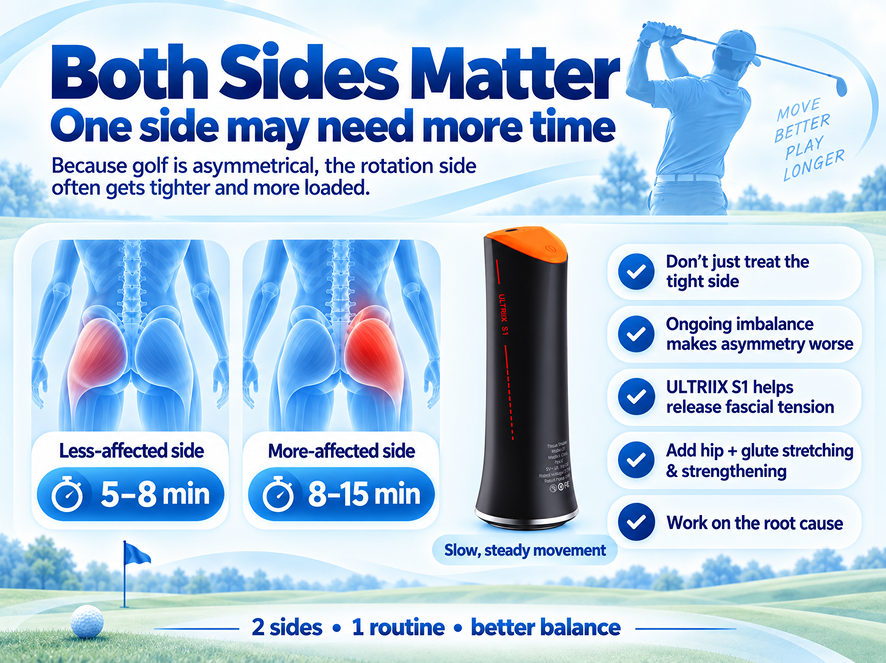
Recommendations:
1. 5‑8 minutes for the less affected side; 8‑15 minutes for the noticeably stiffer, sorer side. Always keep the probe gliding slowly.
2. Do not treat only the painful side. Neglecting the opposite side will worsen soft‑tissue tension imbalance.
3. Uneven back tension originates largely from swing compensation and asymmetric hip mobility. While Ultriix S1 releases fascial tightness, pair device use with hip‑glute stretching and strength training plus swing habit correction to stop imbalance from worsening.
Q14. Once pain is fully gone, do I still need preventive maintenance with Ultriix S1, or can I stop when pain disappears?
Absence of pain does not mean fascia and tendons have fully recovered their original injury tolerance; only acute inflammation subsides. Repeated golf swing torsion keeps applying load to lower back and elbows. Ceasing all care once pain fuses allows micro‑injuries to accumulate and strains to recur easily. Maintenance‑phase frequency can be lower than recovery‑phase usage. If you play golf often, use Ultriix S1 on lower back and elbows after rounds as needed. If you play infrequently, stick to preventive sessions 1‑2 times per week to preserve soft‑tissue elasticity.
Q15. What risks come from holding the Ultriix S1 probe stationary on one spot during lower‑back treatment?
Many users believe “longer stationary contact equals better effect”, which is a misconception. Keeping the probe fixed in one position does not improve repair outcomes; it may over‑stimulate local soft tissue and amplify soreness.
✅Recommended operation: Maximum 20 seconds dwell time per single spot. Then glide in slow circular motions following back‑muscle fibre lines to cover the full strained area, balancing efficacy and comfort.
Q16. I have an old lower‑back injury without sharp pain, yet it always gets achy after golf rounds. Is Ultriix S1 suitable for this chronic strain?
Ultriix S1 works for this type of post‑play achy chronic soft‑tissue strain. This condition usually stems from reduced elasticity in healed fascia and soft tissues. Torsional swing load during golf triggers achiness and tightness. Ultriix S1 ultrasound reaches deep back soft tissues, improves local circulation, eases fascial adhesions and lessens residual soreness after rounds.
Q17. Why does lower‑back pain return immediately after resuming golf once symptoms fade?
Four common root causes lead to recurrence.
First: Pain subsides yet fascial adhesions and tight tendons remain incompletely healed; only acute inflammation fades, and swing load brings symptoms back.
Second: Fundamental swing flaws remain uncorrected, and you still rely on lumbar compensation for rotation.
Third: Hip and glute strength plus mobility stay unimproved; mechanical weaknesses persist.
Fourth: Reduced physical tolerance: returning to full 18‑hole rounds after long rest creates abrupt exercise overload. Remember pain‑free does not equal fully healed. Maintain soft‑tissue care with Ultriix S1, refine swing mechanics, strengthen hips and glutes, and gradually increase playing frequency instead of jumping straight back to full‑intensity 18‑hole play.
Q18. What back symptoms require you to stop home self‑care and seek professional medical evaluation?
Discontinue all home‑based management including device therapy and seek medical examination promptly if any of the following occur:Severe persistent back pain after back trauma, preventing normal rolling or walking.
1) Pain radiating downward with persistent numbness, tingling or foot weakness across buttocks, thighs and calves.
2) Bladder‑bowel dysfunction or perineal numbness.
3) Persistent back pain at night disturbing sleep.
4) Minimal improvement or frequent flare‑ups despite consistent correct home‑care over 6‑8 weeks.
5) Back discomfort accompanied by fever, unintended weight loss or other systemic abnormalities.
Conclusion
Swing power originates from coordinated hip‑torso movement, not forceful lumbar twisting. Golf‑oriented back protection is not limited to strengthening back muscles or emergency intervention after pain appears. It spans movement correction, pre‑game warm‑up, post‑game recovery and regular home‑based maintenance.
Strength training builds physical stability and suitable gear reduces extra load, yet neither training nor equipment can offset persistent harm caused by flawed swing compensation. True lower‑back health protection demands root‑level adjustment of force‑generation patterns, combining warm‑up, sports‑oriented tissue care and movement correction to build a complete golfer back‑care system. When used alongside Ultriix S1, its ultrasound therapy penetrates deep lower‑back soft tissues, improves fascial adhesion, relieves post‑exercise aching and tightness, and eases discomfort left by old chronic strains. Respect your body’s tolerance threshold, increase exercise intensity progressively, stop treating your lower back as the swing’s “sacrifice”, so you can safely enjoy golf long‑term.