
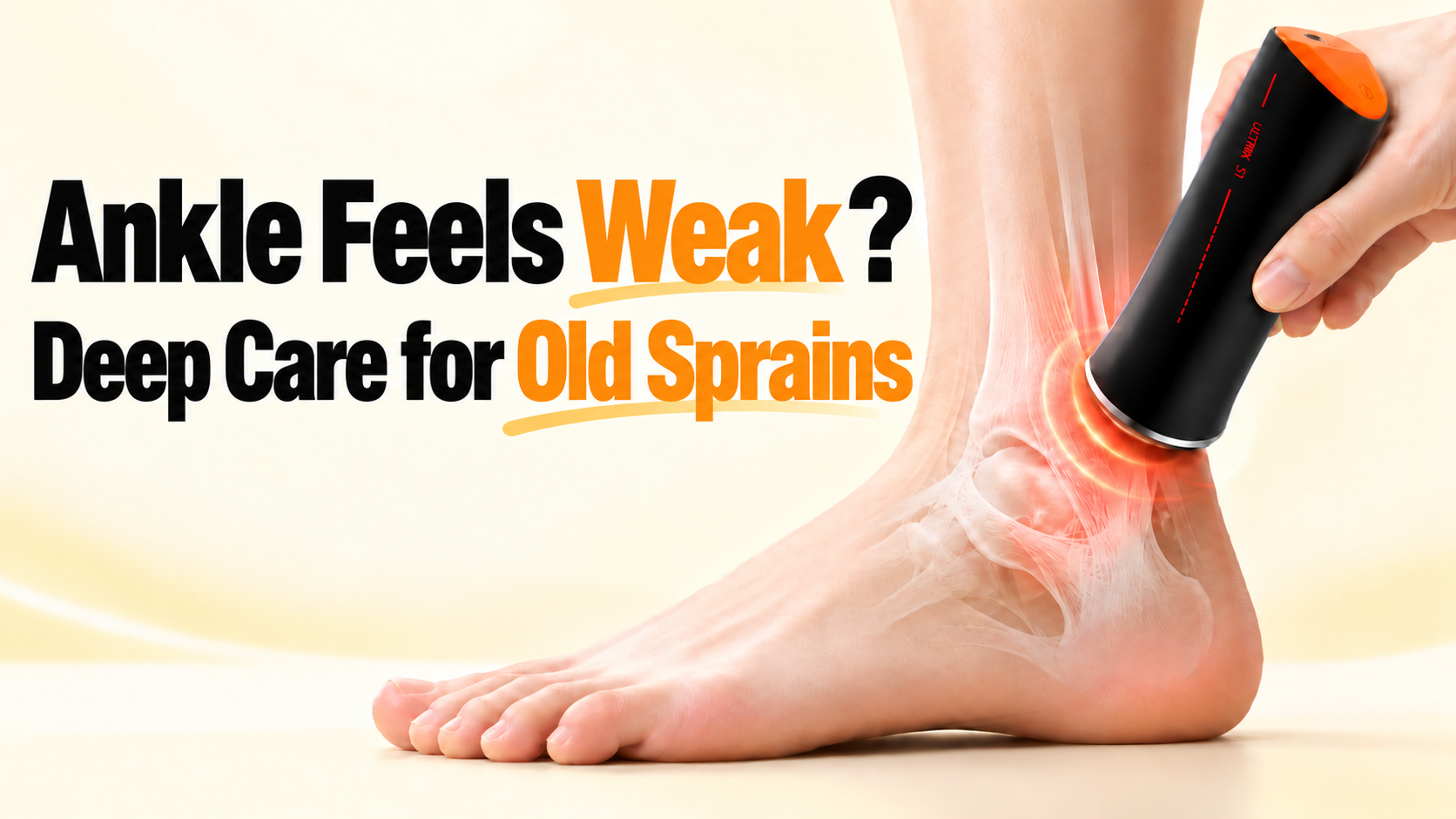
Many people with a history of repeated ankle sprains have experienced this strange issue: even without long walks or intense exercise, simple walking on flat ground can trigger unexplained aching, weakness, dull tightness and fatigue. The discomfort often comes without warning. After a short walk, the ankle may feel unable to support your weight, and severe cases can disrupt daily mobility.
A lot of people simply attribute this problem to poor fitness or lack of training. In most cases, however, it stems from lingering sequelae of old injuries — Chronic Ankle Instability (CAI) or internal soft tissue adhesions inside the joint. Even low-impact walking continuously loads the ankle joint, which easily aggravates hidden structural issues and brings recurring soreness and fatigue.
I. Why do old sprains make ankles prone to fatigue?
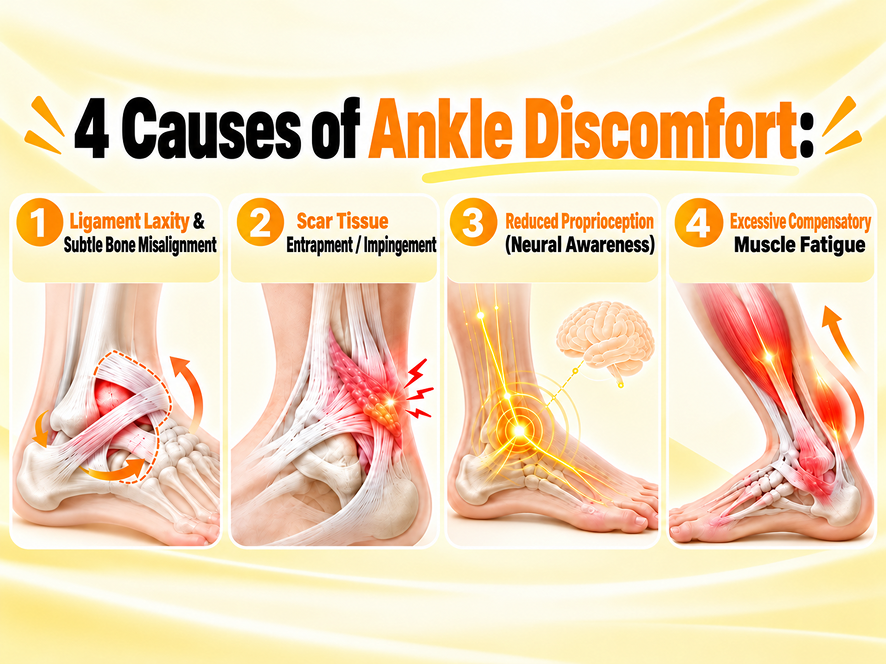
An ankle sprain is more than momentary pain; injury-induced changes persist long-term inside the joint. Four key mechanisms cause discomfort:
✅ Ligament laxity and minor bony malalignment
A sprain is essentially a ligament tear. After healing, lateral ligaments such as the anterior talofibular ligament become like overstretched rubber bands and lose their ability to firmly stabilize the joint. When bearing weight while walking, tiny abnormal gliding occurs between ankle bones, creating persistent deep tightness.
✅ Scar tissue impingement
Repeated sprains lead to scar tissue buildup and inflamed synovium within the joint capsule. When the ankle bends to a certain angle, excess soft tissue gets trapped between bony surfaces, triggering sudden soreness and heavy fatigue.
✅ Diminished proprioception (neural awareness)
Ligaments are packed with nerve receptors that sense joint position. After repeated injury, the brain becomes slower to detect foot landing angles. Even on smooth ground, invisible subtle tilting of the ankle pulls sensitive surrounding soft tissue.
✅ Excessive compensatory muscle fatigue
With lax ligaments failing to stabilize the joint, the burden of ankle balance shifts entirely to the outer lower leg muscles. These muscles stay tense continuously during walking. Once muscle endurance is exhausted and joint loading becomes unbalanced, discomfort flares up.
Rest only relieves soreness temporarily. It cannot repair loose ligaments or restore lost proprioception.
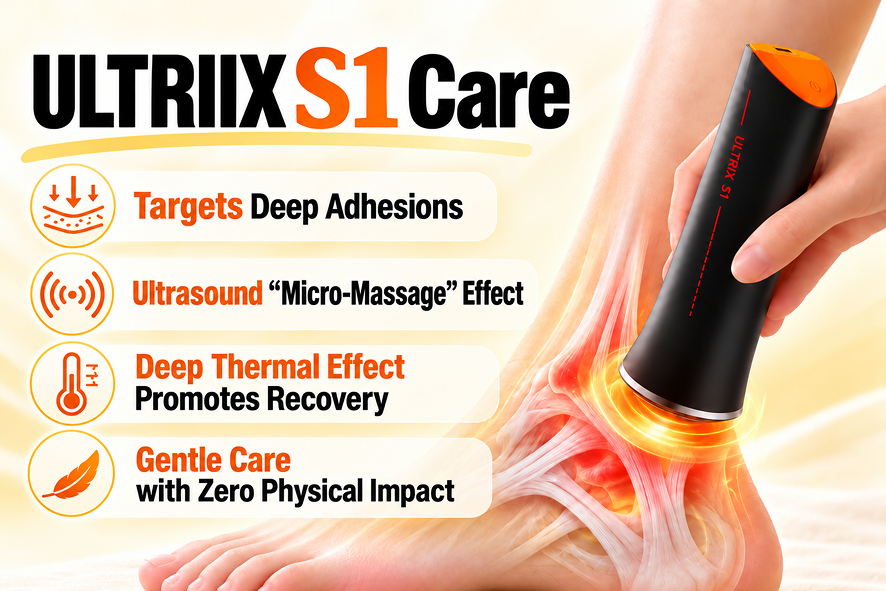
Traditional massage mostly relaxes superficial muscles. For scar tissue and micro-tears deep inside the ankle from past sprains, the ULTRIIX S1 Ultrasound Massager offers a targeted care solution:
1. Reach deep adhesion sites
Scar tissue commonly forms after ligament healing inside the ankle. Equipped with 1.1MHz high-frequency ultrasound, ULTRIIX S1 penetrates the epidermis and reaches fascia and deep joint tissue 3–6 cm beneath the skin.
2. Micro-massage effect of ultrasound
Unlike the strong percussive impact from massage guns, ultrasound delivers gentle, high-frequency micro-mechanical vibration. It gradually loosens stubborn deep adhesions, improves local microcirculation, speeds up metabolism, and eases deep tightness and fatigue.
3. Deep thermal effect to support tissue repair
Ultrasound energy converts into gentle deep heat under the skin, dilating capillaries, delivering nutrients and oxygen to sub-health ankle ligaments, and accelerating recovery of minor damage.
4. Gentle care with zero physical impact
For ankles with prior injury history, heavy pressure and percussion can easily cause secondary strain. ULTRIIX S1 transfers energy softly without harsh mechanical compression.
II. Home Stabilization: Ankle Rehabilitation Exercises
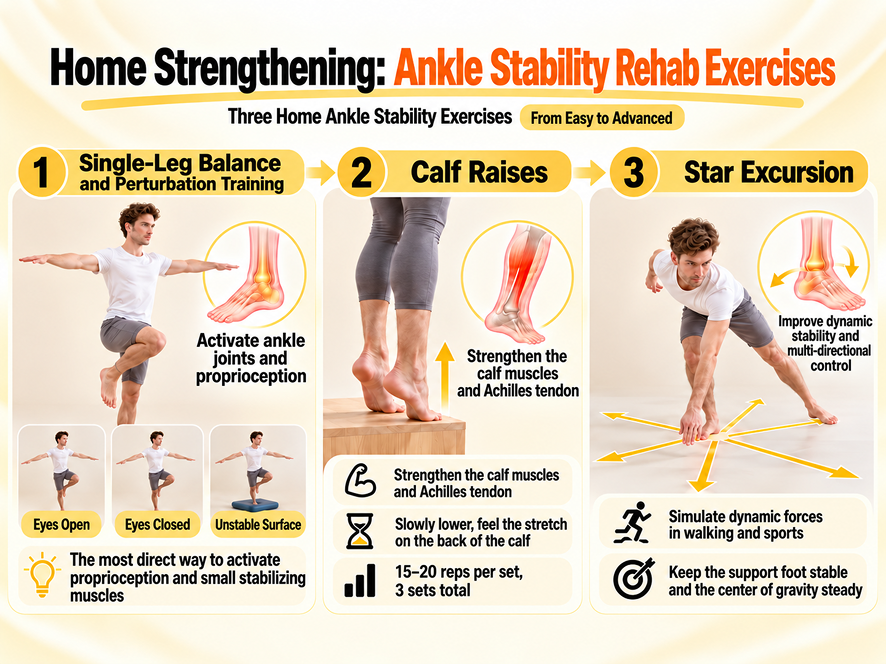
Alongside deep release with ULTRIIX S1, active rehabilitation training is critical for long-term ankle stability. The core goal is to rebuild proprioception (balance awareness) and strengthen compensatory muscles around the ankle. The three progressive home routines below go from beginner to advanced, perfect for ankle stabilization:
Single-Leg Balance Training
The most direct way to activate small stabilizer muscles and restore proprioception. Instructions: Remove shoes and socks for better sensory feedback. Stand on one leg with a soft knee bend and stable pelvis.
Progression: Stage 1: Eyes open on a firm surface, hold for 30–60 seconds Stage 2: Eyes closed, to strongly stimulate nerve receptors and practice subtle ankle balancing adjustments Stage 3: Eyes open or closed on an unstable surface (folded towel or soft mat)
Calf Raises
Build strength in the triceps surae and Achilles tendon, the primary posterior ankle stabilizers. Instructions: Stand with the balls of your feet on the edge of a step or thick book, heels hanging free. Rise slowly to tiptoe, pause 1–2 seconds at the top. Key point: Lower extremely slowly (eccentric contraction), let heels drop below the edge and feel the calf stretch. Sets & reps: 15–20 reps per set, 3 sets total. Progress to single-leg or weighted calf raises as strength improves.
Star Excursion Balance Test
Mimics dynamic loading patterns to prevent rolling your ankle during walking and sports. Instructions: Mark an 8-point star shape on the floor. Stand on the center with your supporting leg slightly bent. Reach the opposite foot toward each of the 8 directions as far as you can, tap the ground and return immediately. Key point: Keep your injured supporting foot planted firmly without shifting or wobbling; keep your center of gravity stable.
We recommend pairing ULTRIIX S1 with these rehab exercises once finished.
Muscles and fascia stay highly tense and fatigued post-workout. Deep tissue release closes the full recovery loop: training stimulus ➔ thorough release ➔ recovery.
While circulation remains elevated after training, apply a generous layer of the dedicated conductive gel over the calf (triceps surae), above the heel (Achilles tendon), and medial/lateral ankle regions (focusing on the anterior talofibular ligament). Glide ULTRIIX S1 slowly in circular motions for 10–15 minutes to amplify training benefits:
● Relieve high-load fatigue in deep stabilizer muscles used constantly during single-leg balance and star excursion drills
● Flush metabolic waste and prevent new adhesions: high-frequency micro-vibration boosts blood flow, clears byproducts from eccentric calf work and keeps fascia gliding smoothly
● Accelerate supercompensation: deep heat delivers nutrition to vulnerable tissue that has just undergone loading
● Safe support for sensitive joints: no percussive impact to soothe stressed ankles after training
III. ULTRIIX S1 Standard Operation & Sensory Guide
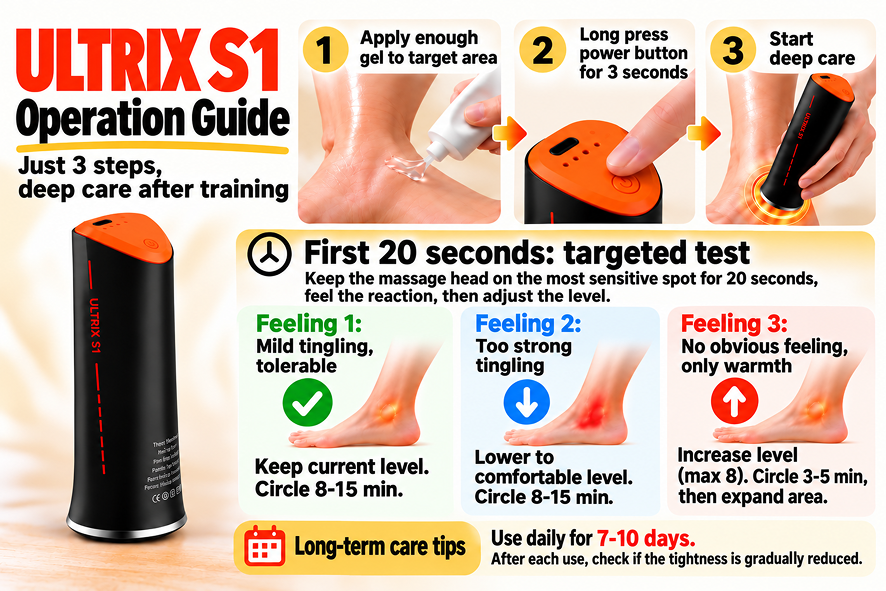
💡 Smart No-Load Protection (First priority): Always apply sufficient ULTRIIX S1 conductive gel over tight ankle areas. High-frequency sound waves require a medium for efficient transmission. If insufficient gel is detected, the device automatically stops energy output and powers off after 3 minutes, ensuring every session works effectively.
Basic workflow: Apply enough dedicated gel to target area ➔ Press and hold power button for 3 seconds ➔ Begin deep care.
First 20 seconds: Targeted penetration & sensory test Rest the massage head firmly on your tightest ankle spot for roughly 20 seconds, assess subcutaneous feedback then adjust the intensity level based on your comfort:
Sensation 1: Noticeable but tolerable aching → Keep current intensity, circle slowly around the tender spot for 8–15 minutes.
Sensation 2: Overwhelming aching discomfort → Reduce intensity to a comfortable level, circle slowly for 8–15 minutes.
Sensation 3: Clear discomfort at the injury site, only warmth during use → Indicates long-standing deep fatigue buildup. You may increase intensity (max level 8), circle locally for 3–5 minutes then widen the treatment range. Minimum session time: 8–10 minutes.
Long-term care recommendation: For chronically tight, fatigued ankles, use daily for 7–10 consecutive days. After each session, notice whether aching and tightness while walking gradually eases to track progress.
Conclusion:
Many people with old ankle sprains ignore recurring ankle weakness, writing it off as a minor issue that will pass. Discomfort from chronic ankle instability will not resolve on its own; rest alone only addresses symptoms, not the root cause.
To free yourself from ankle fatigue and soreness even on flat ground, build a consistent care routine: rebuild ankle stability with rehabilitation training, combine it with ULTRIIX S1 to release adhesions and ease strain, and gradually improve ligament condition and proprioception. With consistent care, ankle support and tolerance will improve. You will no longer be limited by unexplained weakness and fatigue, and can walk and move freely again.